Make Your Smart Home More Secure: Samsung Appliances’ Built-In Security
November 13, 2025
AI functionality has become deeply integrated into everyday life. Awareness and concern around the cybersecurity threats this poses are naturally increasing as the technology advances, with recent research[1] showing that nearly 9 out of 10 Brits (89%) express concerns about their privacy. As a result, security must be at the forefront of technological innovation. Robust security frameworks within devices and appliances are more important than ever.
For this reason, Samsung has been working to redefine how digital safety is built into everyday life. At IFA 2025, we shared how it is making the AI Home a reality, with security a fundamental pillar. The company’s unique security solutions, including Knox Matrix[2] and Knox Vault[3] have been applied to a wide range of home appliances, helping create a safer and more secure home environment.
How Does Samsung Prioritise Security?
While 2024 marked the first time Samsung formally introduced Samsung Knox for home appliances, the company has been working on embedded security for over a decade. Back in 2011, as Samsung was exploring appliances that could serve as early-stage home controllers, internal research had already begun to find ways to prevent data theft.
According to Seb Goff, Brand Marketing Lead for Digital Appliances at Samsung Electronics UK, real momentum began with the launch of the refrigerator with Family Hub. It integrated services that could store personal data, like schedules on a calendar, and leveraged Samsung account information. It also allowed users to remotely connect and control their refrigerator via SmartThings.[4]
“Back then, IoT was still new, and there was limited awareness of the security challenges associated with IoT devices,” Goff notes. “It wasn’t easy to get started. We had to consider what standards and security models would be appropriate for home appliances, and it required significant technological investment.”
Coincidentally, this was also when a type of malware that infected IoT devices first emerged. The arrival of malware that targeted connected devices, around the same time that Samsung’s IoT refrigerator released, marked a paradigm shift. It drove Samsung to accelerate security research and development.
The Scope of Security Requirements Is Expanding
While the debut of Family Hub raised awareness about the need for appliance security, the expansion of SmartThings deepened the technical demands.
“There’s simply more to consider,” says Goff. “With SmartThings, some functions may involve basic data exchange, while others could handle more personal information. For example, the Map View feature[5] allows users to see multiple connected devices at a glance. However, it also means that devices must share data with one another, which increases both the number and complexity of possible use cases.”
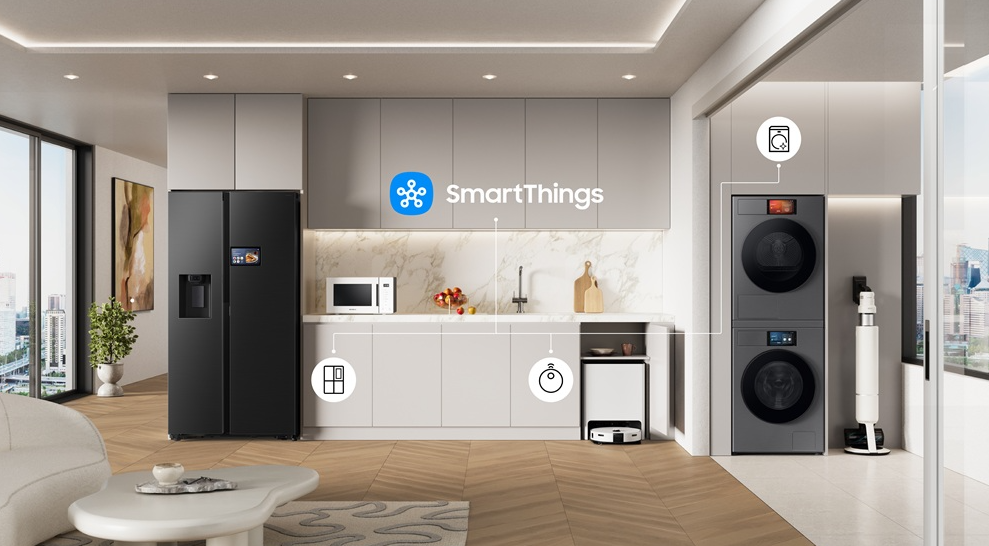
“This shifts the focus from securing individual devices to ensuring inter-device security within a connected environment. Looking ahead, as technologies that incorporate AI continue to advance, even more use cases and threats must be anticipated. That’s why it is becoming increasingly important to establish clear security criteria, which decide how security should be applied and how it must be reflected in product design from the outset.”
The evolution of product features has also accelerated the adoption of new security technologies. As devices become more advanced and their capabilities expand, security measures must evolve to meet those new demands.
“Think about robot vacuums,” Goff explains. “In the past, the camera was used for navigation. But the model we now have introduced monitoring features, which brought video security into the mix.[6] As features evolve, the volume and sensitivity of the data that must be protected increases, and so does the complexity of the technology required.”

Monitor Your Appliances Through Samsung SmartThings
Over time, Samsung has steadily built up its security technologies and accumulated valuable know-how through a range of experiences. This is why, at a time when security has become a top priority, the company can confidently position it front and centre.
Furthermore, Samsung has achieved significant advancements in security through its mobile business, which is one of the most personal and security-sensitive product categories. Leveraging these technologies, and with a broad portfolio that spans TVs to mobile devices, the company has been able to extend its security innovations across business divisions, establishing a robust protection framework in home appliances.
Are Samsung Appliances Certified as Secure?
“The appeal of a smart home lies in how appliances adapt to you and are easy to control,” he added. “But if your personal data is at risk, you simply can’t feel secure. We’ve been consistently investing in this space for over a decade, and we believe that’s why renowned institutions and government bodies have recognised our efforts.”
In fact, the strength of Samsung’s security system has also been verified with several third-party certifications. As a key example of this, multiple products have been verified at level “Diamond” under UL Solutions Marketing Claim Verification IoT Security Rating Program. To earn this verification, which is the highest level, a product must satisfy 56 detailed criteria, across 33 evaluation items in six core domains.
These criteria cover a wide range of aspects, including software updates, data encryption, and system management. The evaluation is thorough and designed to ensure compatibility with various international security standards, making it one of the most comprehensive certifications available.
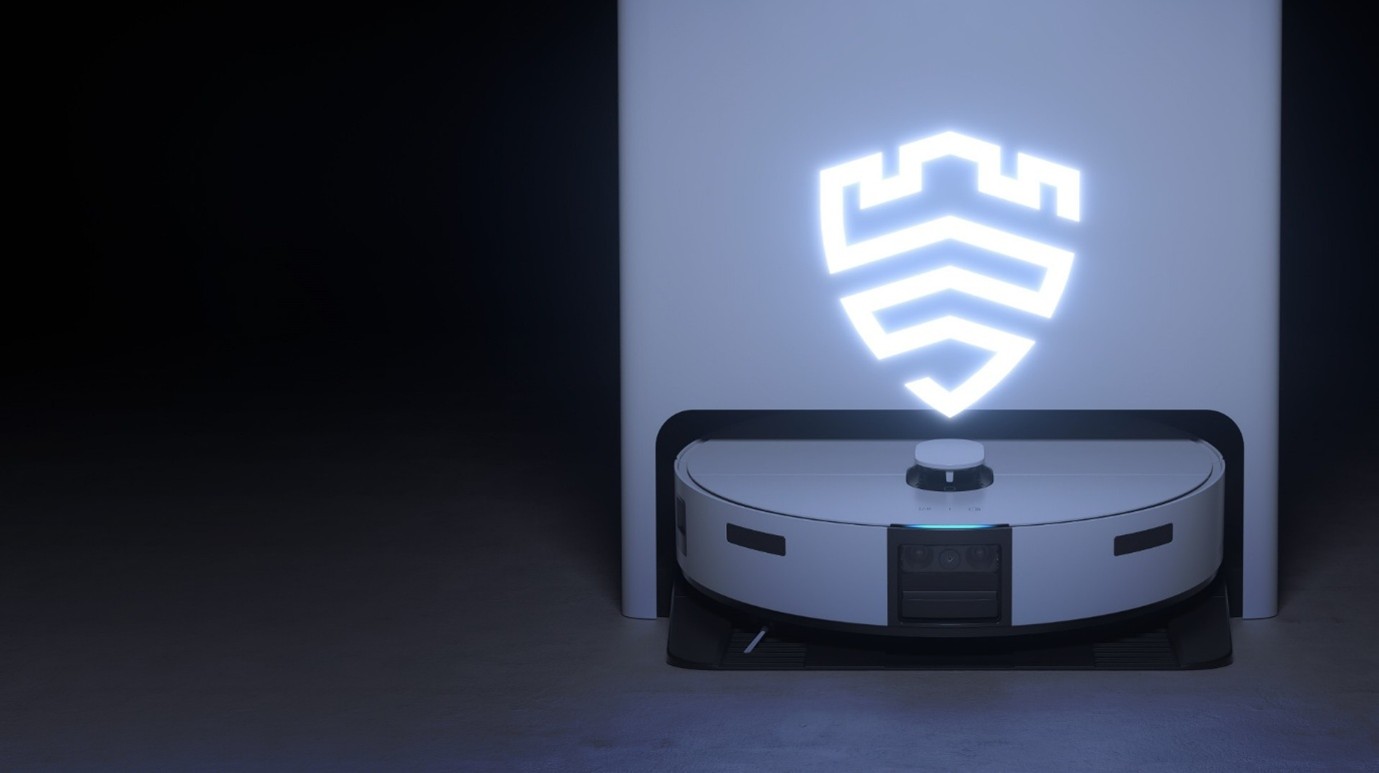
Bespoke AI Jet Bot Combo
Another area where Samsung demonstrates clear strength is in privacy protection. The company’s Bespoke Jet Bot Combo AI, a vacuum and mop robot cleaner, became the first of its kind to obtain the “Privacy by Design” certification, administered by the Korea Internet & Security Agency (KISA).
This certification requires that personal data protection be considered throughout the entire lifecycle of a product or service — including planning, production, and disposal — and involves passing 71 detailed evaluation criteria across four key domains.
“As you can see from the number of criteria, even though there may be some overlap, the items are diverse, and the requirements differ slightly for each certification. So, it’s not easy for one product to meet multiple sets of standards simultaneously,” Goff explained. “Fortunately, our robot vacuums already comply with a wide range of IoT standards, so we were able to fulfill the security requirements, which also played a crucial role in protecting user privacy.”
Further underscoring the company’s leadership in both home appliance technology and data security, Samsung’s robot vacuum cleaner, the Bespoke Jet Bot Combo,[7] and Bespoke AI Refrigerators[8] also received an IoT security certification from TÜV Nord, a global certification organisation based in Germany. TÜV Nord is a globally renowned institution, acknowledged as an IECEE-accredited National Certification Body.
How is Samsung Making Its Appliances More Secure for The Future?
At a recent global conference, Samsung addressed the future of security, introducing Post-Quantum Cryptography (PQC),[9] a new and lesser-known data encryption technology. This type of protection is becoming increasingly necessary because as quantum computing advances, current encryption algorithms may eventually become vulnerable to decryption. To stay ahead of this potential threat, Samsung is implementing PQC within Knox Matrix in home appliances.

Post-Quantum Cryptography
While some may question whether it’s too early to be thinking about post-quantum security, Samsung is taking a long-term view to ensure protection is in place for its customers. Home appliances are typically used for around 10 years after purchase. Considering that product lifecycle, Samsung believes it’s critical to prepare now for risks that may become real in the future. That’s the mindset driving its vision for the smart home.
“If you wait until after data starts leaking, it’s already too late. Our mission is to continue enhancing our security technologies so that consumers can always feel safe and secure when using our products,” said Goff.
Why Should I Choose A Samsung Appliance?
Security is one of many reasons to choose a Samsung Appliance. You can find out a little more in the video below, and on Samsung.com.
[1] Research from Samsung Electronics, which surveyed over 8,000 Millennial and Gen Z respondents across Europe, including the UK
[2] Currently applied to all Wi-Fi enabled appliances launching in 2025 and planned to be expanded to chosen models that launched in 2024 from September 2025.
[3] Currently applied to appliances with 7-inch or 9-inch AI Home, and AI Family Hub™ screen launching in 2025, except Bespoke AI Oven.
[4] Available on Android and iOS devices. A Wi-Fi connection and a Samsung account are required.
[5] Available on Android and iOS devices. A Wi-Fi connection and a Samsung account are required.
[6] Available on Samsung devices running Android 11 or later, and may not work on some devices.
[7] VR7MD97****/**, VR7MD96****/**
[8] RM90F**B***, RF90F**A***, RF90F**E***, RM90F**C**, RM90F**D**, RM90F**E**, RM90F**X*, RF90F**B***, RF**DB99***, RF**DB95***, RF**DG9H***
[9] PQC is applied to appliances with 7-inch or 9-inch AI Home, and AI Family Hub screen™ launching in 2025. (except Bespoke AI Oven)


