Reimagining The European Home: How Adaptive Technology Is Reshaping How We Live
April 27, 2026
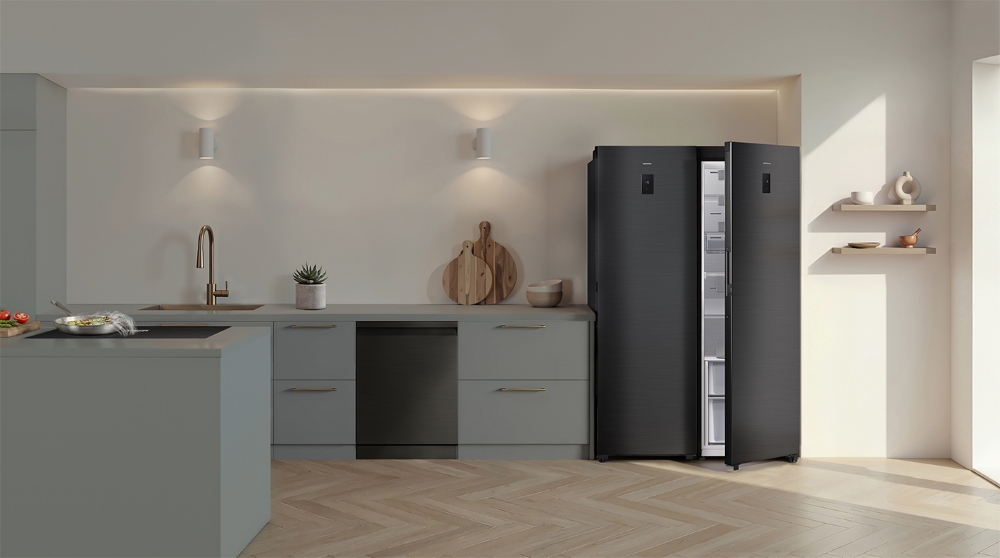
The typical European home is rich in history, but as society evolves, expectations are changing. Ageing properties, rising energy costs and shifting demographics are exposing how current homes weren’t built for how people live today.
Fox Al Rajim, Samsung’s European Lifestyle Lab Insights Manager, recently explored Samsung’s role in helping existing homes adapt to modern living with the support of artificial intelligence (AI).
Across the continent, one in four adults now live with a disability, which accounts for around 90 million people.[1] With the share of people aged over 65 increasing[2], the importance of home modernisation continues to climb. Many homes are not currently designed with this range of needs in mind, and new housing is in decline. With this context, adaptive technology is more important than ever.
“People live in their homes longer than they did in the past, so these structures now need to work throughout many different stages of life,” Fox says. “We strive to make everyday living easier and more intuitive as our needs change over time.”
Designing homes for real lives
AI is beginning to change how people interact with their homes. Rather than adapting to appliances, users are increasingly able to set the terms themselves. Voice control, personalised settings and automated features are becoming part of everyday use, supporting independence and making tasks easier to manage.
Samsung’s Voice Control and Auto Open Door features, found in refrigerators such as Family Hub[3], reflect this shift, designed with accessibility top of mind from the outset.
Sustainability is another factor shaping European households, with many households particularly as they look to use energy more efficiently and make more eco-conscious choices.
Samsung Lifestyle Lab Europe data shows that 60% of people report experiencing energy stress, while almost half (45%) struggle with heat loss in their homes[4].
“Luckily, new AI enhancements can help consumers optimise energy use and improve efficiency with visible real-time impact”, says Fox.
Samsung’s latest washing machines feature elements like Enhanced AI Wash+, making them up to 65% more energy efficient than the standard European Class A requirement, by sensing the load and adjusting water, detergent and cycle settings accordingly – helping households reduce energy use and manage costs more effectively. [5]
From smart homes to adaptive homes
Time is also shaping how people experience their homes.
Modern life is busy, and domestic responsibilities remain unevenly distributed. Women in Europe still spend significantly more time on household chores than men, while consumers overall devote hours each week to rote tasks like laundry. [6]
Attitudes towards AI are changing as a result.
“Our research found that 63% of people say they feel ready to adopt more AI technology in their homes,[7]” says Fox. “For anyone who is short on time, AI adoption is simply the most practical solution.
“This is giving rise to a new idea: the adaptive home. Unlike traditional smart homes, which rely on pre-set commands, adaptive homes are dynamic. They learn from behaviour, anticipate needs and respond in real time, whether that’s adjusting energy usage, streamlining chores or tailoring interactions to individual users.
“AI’s role is not to replace human decision making, but to complement it,” says Fox. “It acts as a companion within the home, learning, supporting and evolving alongside its occupants.”
This shift is particularly significant in Europe. Large scale renovation is often slow and expensive, but intelligent technologies offer a more immediate route to improvement. By layering digital capabilities onto existing spaces, homes can become more accessible, efficient and responsive without the need for major structural change.
In practice, expectations of the home are changing. Technology is becoming part of how homes keep up with everyday needs, often without requiring major change.
For Samsung, the opportunity lies in turning this vision into reality: creating technologies that are not only smart, but meaningful and designed to improve daily life in ways that are intuitive, inclusive and enduring.
Because ultimately, the future of the home is not just about innovation and smarter technology. It’s about making better living possible, for everyone.
[1] Council of the European Union (2026), Disability in the EU: facts and figures (infographic compiling Eurostat statistics on EU population aged 16+ and Eurobarometer survey data on discrimination). https://www.consilium.europa.eu/en/infographics/disability-eu-facts-figures
[2] Eurostat. (2024). Level of disability (activity limitation) by sex, age and income quintile. https://ec.europa.eu/eurostat
[3] A Wi-Fi connection and a Samsung account are required to access the Family Hub™, our network-based service, including apps, Bixby, and other smart features available through your refrigerator.
[4] Samsung (2024), Lifestyle Lab Europe: European Residential Environment Quant Study (EU9, Q4 2024, n=4,583).
[5] Based on Samsung internal testing. The energy consumption of the WF90H/24 (9kg) model achieves an EEI of 18.2 (18.2kWh / 100 cycles), which is up to 65% more energy efficient compared to the minimum threshold for Class A (EEI 52 for 9kg models) under Regulation (EU) No 2019/2014. Results may vary depending on the usage environment. Energy ratings tested with the Eco 40–60 program.
[6] European Institute for Gender Equality (2021), Gender Equality Index 2021 report: Domain of time – Gender differences on household chores entrenched from childhood. https://eige.europa.eu/publications-resources/toolkits-guides/gender-equality-index-2021-report/gender-differences-household-chores
[7] SmartLab (2025), AI Home study commissioned by Samsung, (UK, France, Germany and South Korea, August 2025, n=1,212).


