Graduation Ceremony Applauds Accomplishments of 35 Students 5th Cohort of UWC Software Development Programme
23-02-2026
Samsung Enhances Employment Prospects & Addresses Socio-Economic Challenges Faced by Country’s Youth
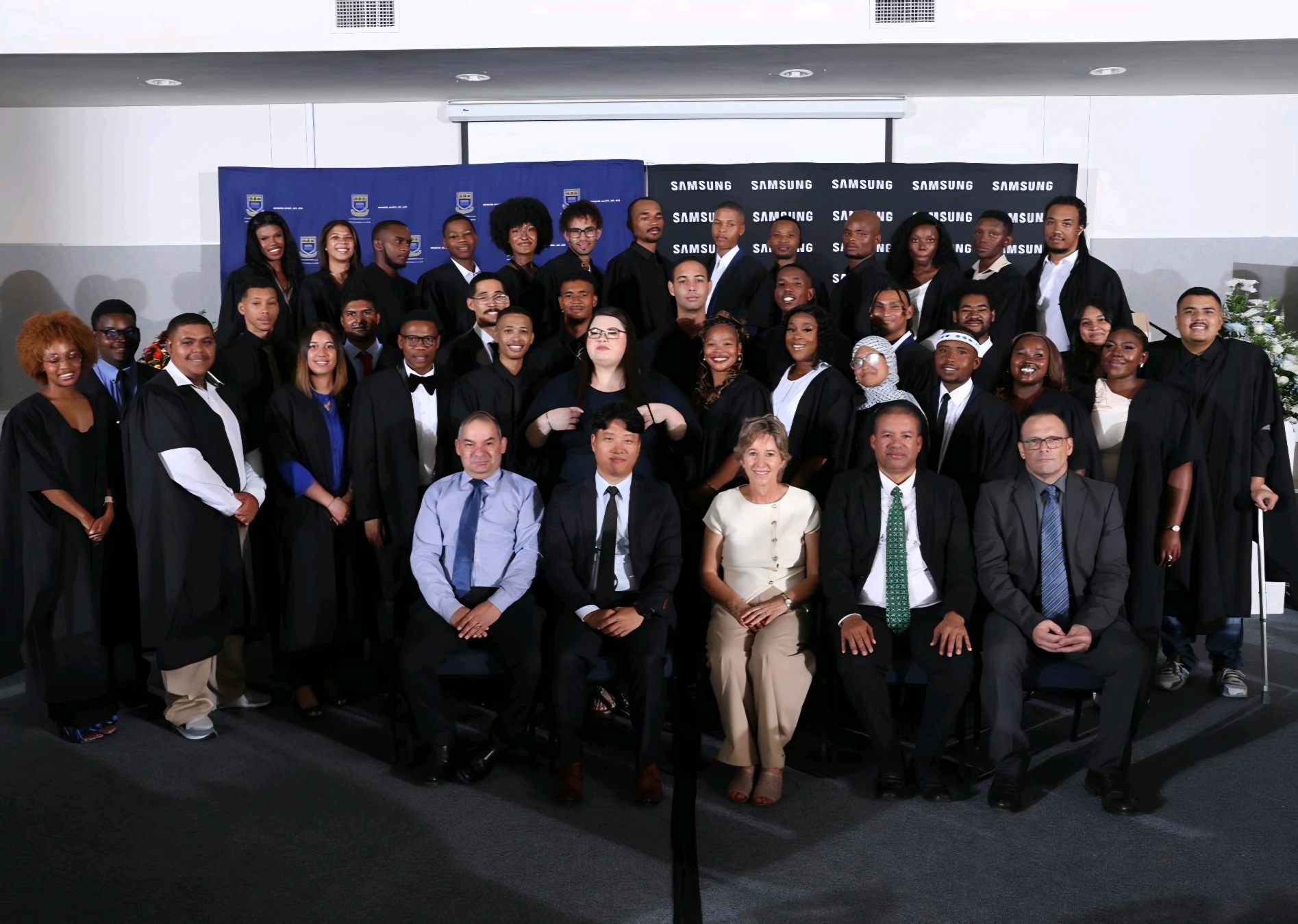
Recently, thirty-five (35) students from the 5th Cohort of the University of the Western Cape (UWC) Software Development (SWD) Programme sponsored by Samsung – were recognised at a graduation ceremony held on 18 February 2026. The aim of Samsung’s SWD programme is to address youth unemployment and promote inclusivity for underserved communities in the technology sector.
According to the Western Cape Government: “Despite having the lowest unemployment rate in the country, the rate remains high (18.1% to 19.6% as of 2025/2026), indicating a need for even more job creation”.** This is one of the reasons why Samsung continues to be committed to investing in ICT education within the communities it serves; it’s the company’s way of trying to assist both the province and the country to overcome the youth unemployment challenge.
The graduating students are part of the Future-Innovation Lab (FIL) at UWC – a driving force in South Africa’s digital transformation agenda. Established in 2019 through a multi-year partnership with Samsung, the FIL creates pathways for young people to thrive in the digital economy through advanced training, applied research and inclusive innovation.
As the programme reaches the conclusion of its 2nd phase, its achievements are remarkable and deeply transformative. Over the past six years, the programme has empowered its beneficiaries with comprehensive training in cutting-edge software development technologies. Participants have gained proficiency in high-demand coding languages, software architecture, web and mobile app development, database management and more.
The hands-on and project-based approach has ensured that graduates emerge not just with theoretical knowledge, but also with the practical skills demanded by the modern job market. Just over 90% of the programme’s 384 beneficiaries have already successfully been taken up in industry. Another core focus of the programme has been addressing the lack of female software developers in the industry. In this regard, 51% female representation has been achieved in the programme to date.
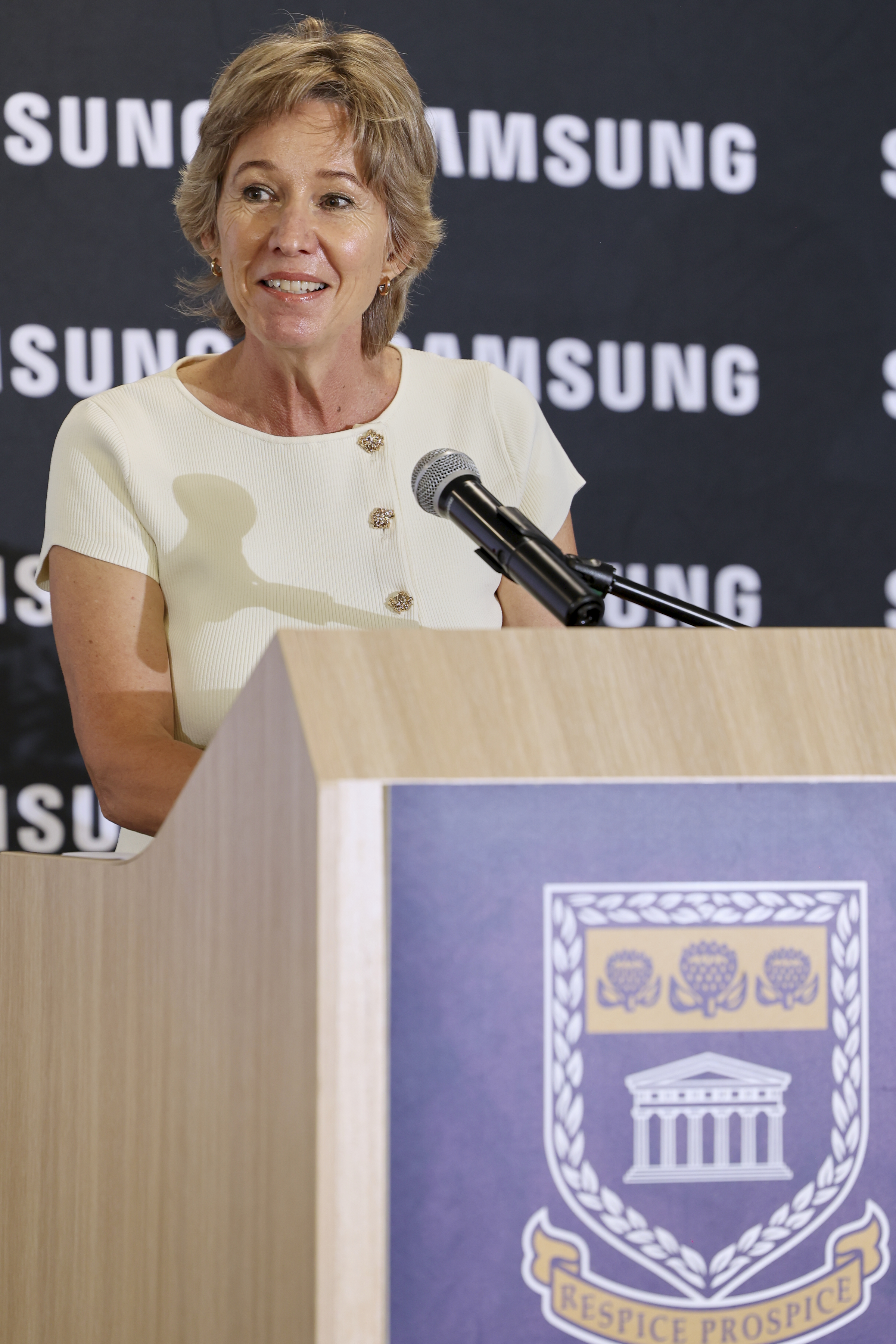
Leona Craffert, Director for Western Cape Colab and Institutional Planning.
Lois Dippenaar, Institutional Planner at UWC said: “This collaboration with Samsung demonstrates the real impact that industry-academic partnerships can have on social mobility and inclusive innovation. Our graduates leave this programme with practical experience, professional networks and a strong sense of purpose to shape South Africa’s digital future.”
The FIL aims to provide an opportunity to deserving previously disadvantaged youth (18-35) and equips students not only with strong foundations in software development and digital social innovation, but also with the advanced skills needed for emerging careers in Artificial Intelligence (AI) and data-driven software development.
Importantly, through its work-integrated learning streams and close collaboration with industry, the FIL highly contributes to graduates’ readiness for the rapidly evolving AI and technology landscape. In addition, the Western Cape CoLab – an applied research unit at UWC which manages the FIL – complements this skills pipeline with research, policy engagement and applied projects on digital inclusion and technology governance.
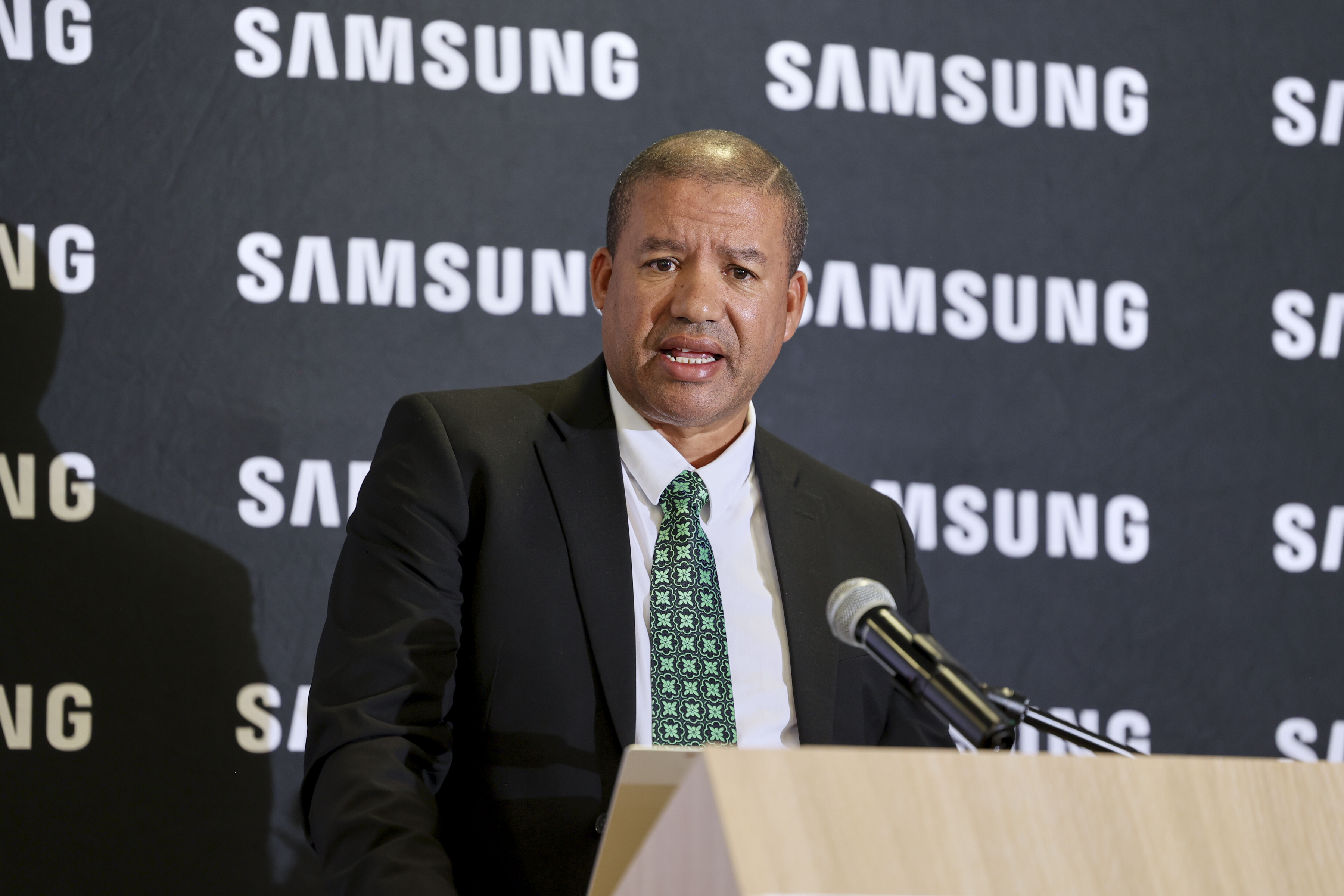
Nicky Beukes, Samsung South Africa EEIP Project Manager.
Speaking at the event, Nicky Beukes, Samsung South Africa EEIP Project Manager added: “The Future-Innovation Lab reflects Samsung’s long-term commitment to developing digital skills and supporting youth employability in South Africa. Through this partnership with UWC, we are not only equipping young people with in-demand technical skills but also helping them build the professional confidence and workplace readiness required to succeed in the digital economy.”
Towards the end of the 10-month programme, students from this graduating cohort were able to present their projects, which showcased technology solutions addressing real-life problems or improving systems for greater efficiency. By designing apps and utilising the skills and knowledge gained throughout the programme, they demonstrated innovative approaches to solving challenges.
All of this illustrates the lasting impact that this programme has had on these graduating students. Also, it means that by aligning student training with national priorities such as AI maturity, digital skills and innovation for inclusion – UWC in collaboration with Samsung have managed to position themselves at the forefront of Africa’s efforts to ensure that digital technologies drive sustainable and equitable growth.
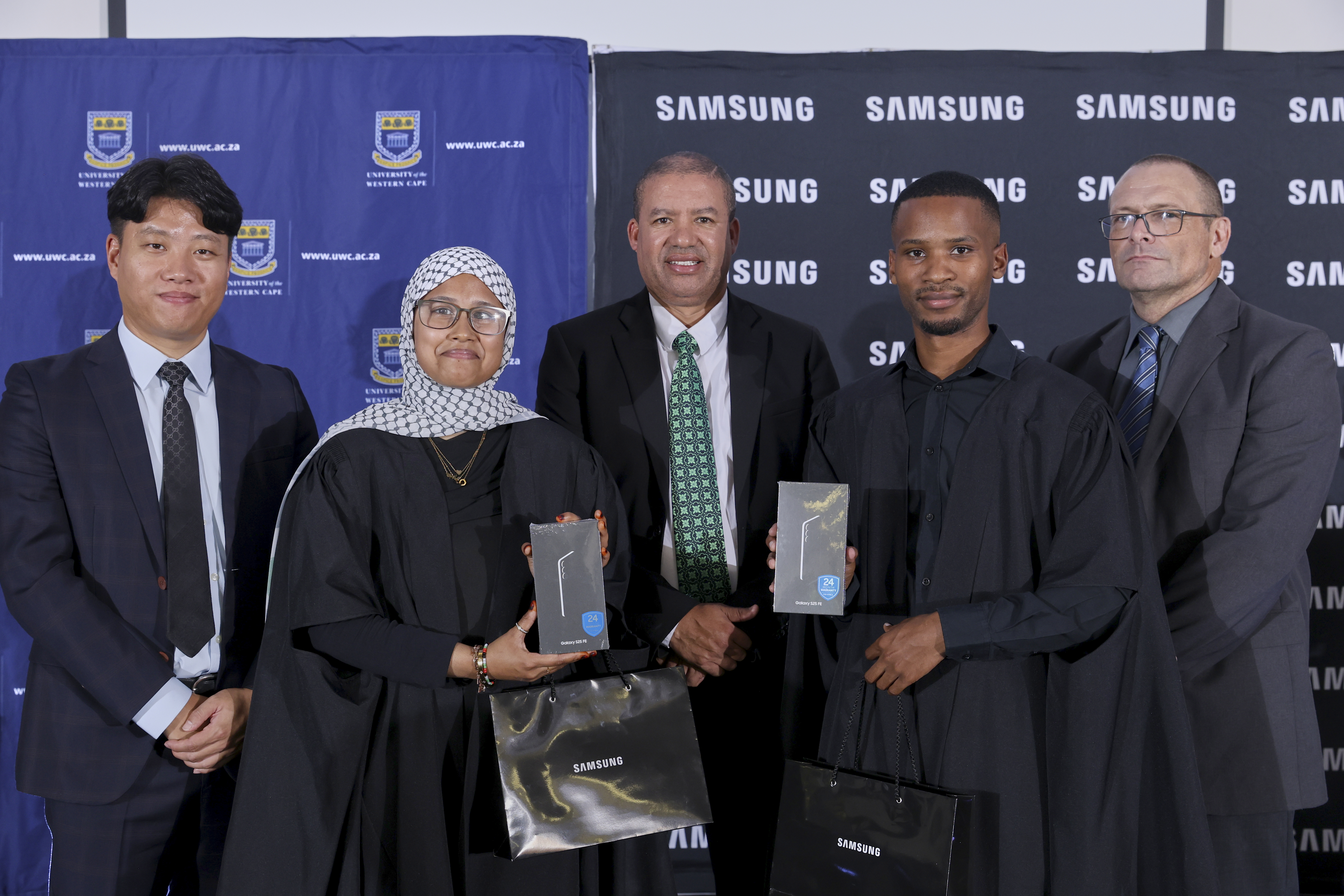
Beukes concluded: “As Samsung, we are very proud of these student’s achievements and the positive impact of our collaboration with UWC. Together with our partners, our continued commitment to ICT Education and youth empowerment allow us the opportunity to strengthen our focus on uplifting local communities by providing access to ICT training and skills development programmes – ensuring that individuals from disadvantaged backgrounds can thrive in the technology sector.”
** Source: Western Cape Government – https://www.westerncape.gov.za/education/article/202526-education-budget-stepping-our-learners
For any issues related to customer service, please go to samsung.com/za/support for assistance.
For media inquiries, please contact ssapr.newsroom@samsung.com.