From Discarded Jeans to New Livelihoods: Meet Maharashtra’s 21-Year-Old Innovator Turning Denim Waste into Opportunity
28-09-2026
Yogeeta Kishore’s initiative, Indiejeanous, transforms discarded denim and textile scraps into lifestyle products while creating livelihood opportunities for women artisans
Selected among the Top 20 teams of Samsung Solve for Tomorrow 2026, Yogeeta is now developing a prototype and preparing to take her idea beyond her community
Mentorship, peer learning and expert feedback are helping the young Maharashtra innovator turn a personal mission into a potentially scalable venture
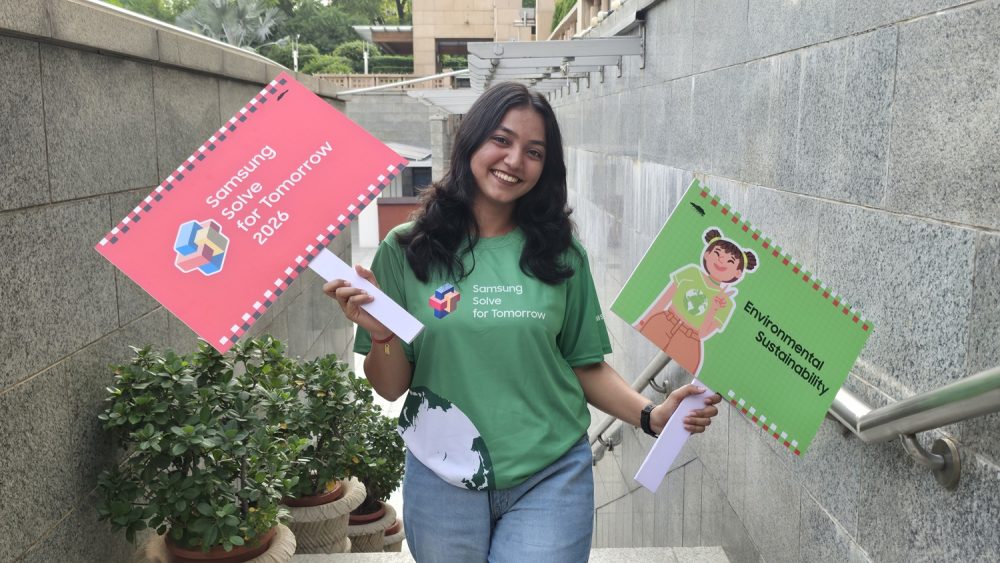
What if an old pair of jeans could stay out of a landfill—and help a woman earn a livelihood?
That is the idea driving 21-year-old Maharashtra innovator Yogeeta Kishore, who has spent the past year-and-a-half working to turn denim waste into opportunity.
Her initiative, Indiejeanous, transforms discarded denim and textile scraps into lifestyle products while creating livelihood opportunities for women artisans. Now selected among the Top 20 teams of Samsung Solve for Tomorrow 2026, Yogeeta is working to develop a prototype and explore how her community-led idea can grow into a scalable venture.
For Yogeeta, the selection has marked a turning point.
“I am grateful to be a part of Samsung Solve for Tomorrow. Getting reviews and feedback has been amazing, and it feels like a great platform for young changemakers,” she said.
From Upcycling Waste to Building a Viable Solution
Before joining the programme’s bootcamp, Yogeeta’s approach was largely focused on giving discarded textiles a second life. Interactions with mentors, experts and fellow innovators encouraged her to examine the entire journey of textile waste—and think more closely about the people who would ultimately use or benefit from her solution.
“There is a huge difference in my idea. Earlier, we were only focused on upcycling, but now we are looking more deeply at how that waste can be utilised. We have also started prototyping,” Yogeeta said.
The experience helped her recognise that a meaningful idea must work not only environmentally, but also for its customers and the community it seeks to support.
“You have to understand the customer and make sure the solution genuinely addresses the community’s needs,” she added.
Presenting Indiejeanous before a jury and discussing it with young innovators from across India also expanded Yogeeta’s sense of what the initiative could become.
“When I presented my idea and shared it with my peers, I realised that I was not just solving a problem within my own community,” she said.
Finding the Confidence to Think Bigger
The most important change, however, has been personal.
Yogeeta says that building an idea largely by herself often left her questioning whether it could create real impact. At Samsung Solve for Tomorrow, she found a community of young people navigating similar challenges.
“When I talk to my peers, I feel that I am doing something real. I feel inspired and confident. Earlier, I was not so confident,” she said.
That sense of belonging has been particularly meaningful for Yogeeta, who says she did not always find the support she needed during the early stages of her journey.
“Having people around me who understand my idea feels empowering,” she said.
With access to mentorship, constructive feedback and potential grant support, Yogeeta is now refining the Indiejeanous model, developing its prototype and examining how it can generate measurable environmental and social impact.
What began with discarded denim in one community is steadily becoming something larger: a circular-economy idea capable of reducing textile waste, supporting women artisans and demonstrating how young innovators can turn overlooked problems into new possibilities.
At 21, Yogeeta may still be at the beginning of that journey. But she no longer feels that she has to build alone.


