The Future of Mobile AI is Where Personalisation Meets Innovation


In just a few short years, artificial intelligence (AI) has gone from science fiction to something we use every day. As AI gets smarter and more available to everyone, our smartphones have become the main way most people experience this technology.
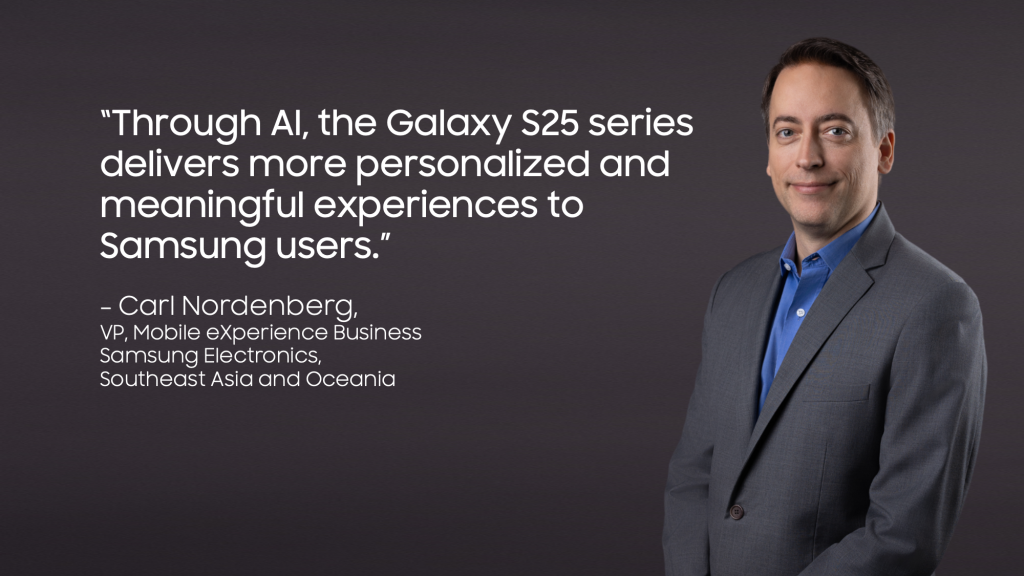
In this Q+A, Carl Nordenberg, who leads the Mobile eXperience business unit in Samsung Southeast Asia and Oceania (SEAO), discusses how Samsung is driving the AI wave, what Galaxy AI[1] is all about, and how the latest Galaxy S25 series mobile phones are helping to shape a future where AI enhances human connection rather than replaces it.
Q1: How do you see smartphones evolving in the ongoing AI revolution?
It is safe to say that generative AI is becoming the transformative technological development of our time. At Samsung, we believe smartphones will empower this AI revolution as the main way that people experience this powerful technology.
Since launching the Galaxy S24 series last year, Samsung has led the way in creating powerful smartphones with seamless AI integration. One year on, I am glad to say that we have reached a point where AI is no longer a futuristic technology, but something that is built into the devices that we use every day.
And we are just beginning to see AI’s true potential! Devices like the Galaxy S25 series will continue to transform how we interact with technology, whether in our creative work or daily communications. Which is why we are dedicated to bringing Galaxy AI to as many users as possible worldwide.
Q2: What are consumers looking for in a smartphone today, and how is that changing with AI?
Our Customer and Marketing Insights team recently conducted a survey[2], which revealed what matters most to users across Southeast Asia and Oceania:
- Advanced camera features
- Integrated AI capabilities
- Improved durability
- Long-lasting battery
- High-performance processing for AI and gaming.
This highlights an important shift in consumer expectations — just 18 months ago, AI would not have been a consideration for smartphone users, and now it is a top priority. The key word here is “integration” – consumers expect that AI will not be an entirely new, independent thing, but an enhancement of how they already use their mobile devices. And as the technology evolves, people will expect their smartphones to act as intelligent assistants that understand and adapt to their needs as individuals – in an integrated and personalised way.
This type of insight helps to guide our development efforts, as we continue exploring AI’s potential to create more meaningful experiences for Samsung users.
Q3: What does “personalisation” mean in the context of mobile AI?
In a region like Southeast Asia & Oceania (SEAO) with its melting pot of diverse cultures, a one-size-fits-all approach simply will not work. In this context, technologies like generative AI present a powerful opportunity for us to deliver personalised and meaningful experiences to Samsung users. That is why personalisation and integration are the cornerstones of Galaxy AI, and for the Galaxy S25 series. The way we see it, true AI personalisation means that technology learns from your unique patterns and preferences to deliver experiences tailored specifically to you.
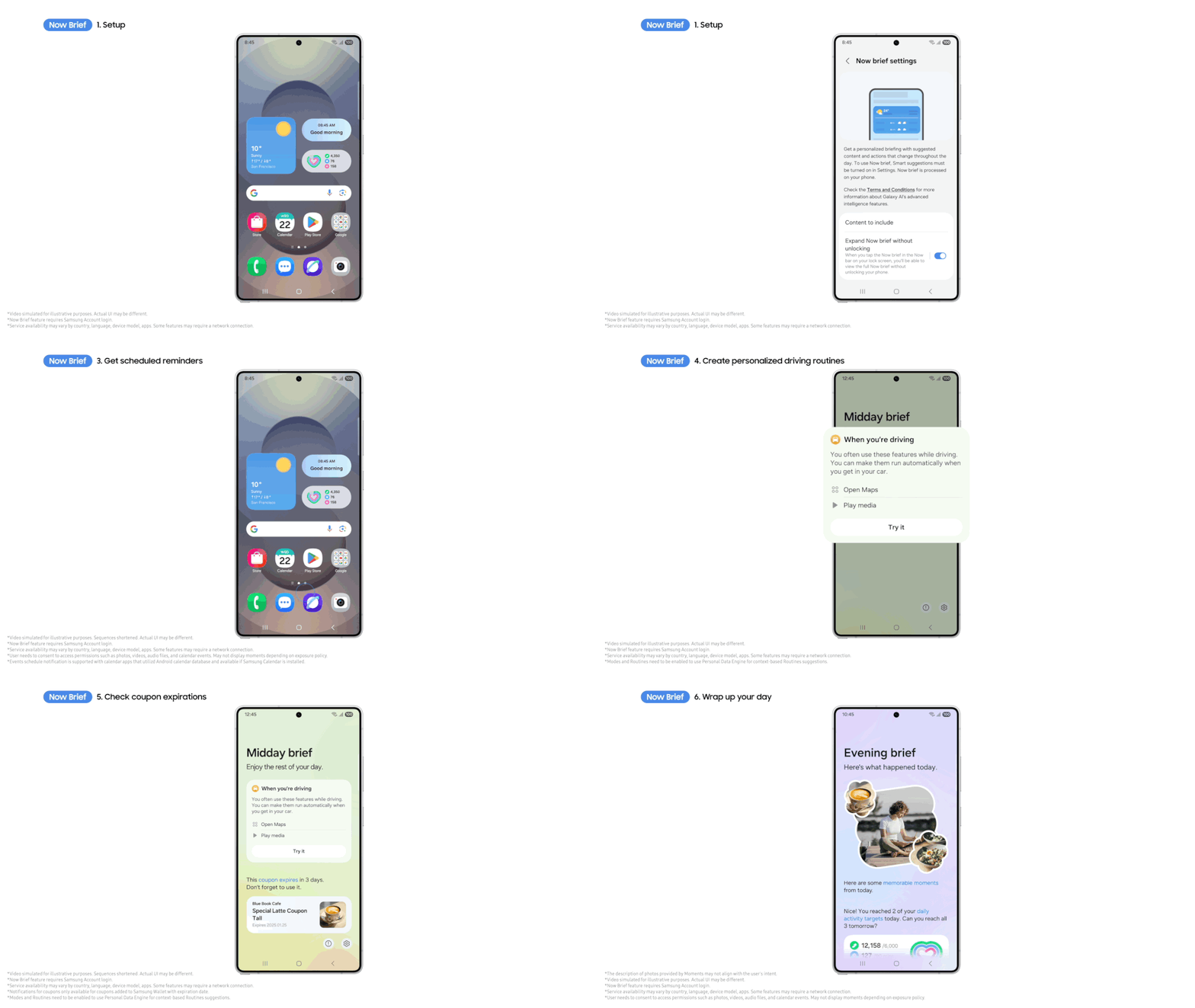
Now Brief is an intelligent feature that learns from your usage patterns and routines to proactively provide customised information tailored to your specific context.
Take for instance, the Now Brief[3] feature on the new Galaxy S25 series. Now Brief acts like an information hub that delivers tailored updates and information to you throughout the day, accessible either through the dedicated Now Brief home screen widget, or via the Now Bar. Tapping on the Morning Brief button first thing in the morning can deliver the weather forecast, traffic information, and your calendar for the day, for example.
As you continue using this feature, your phone learns from your behavior and personalises the information it shows you. Over time, these suggestions become more relevant to your specific preferences and interests. For example, showing you news summaries from your most-read sources or reminding you of your friend’s birthday.
The real breakthrough comes when AI understands not just what you do, but the context around it. Through features like Writing Assist, Galaxy AI is able to recognise the context of what is displayed on your screen such as emails and messages to summarise content for you without the need to switch between applications.
Q4: You mentioned that camera features are a top priority for consumers. How is AI enhancing photography, and is it changing the photo taking experience for them?
Most of us primarily use our smartphones for getting information, for creating memories or for connecting with others. This is especially true when it comes to the smartphone camera, which is particularly important to customers in Southeast Asia and Oceania.
What’s fascinating is how Galaxy AI enhances photography in ways that feel naturally integrated with existing behaviors. We have designed AI camera features that do not change the familiar photo-taking experience itself but improve the end results. Take features like Object Eraser, Best Face[4], and Audio Eraser[5] — these are AI-enabled innovations that do not interfere with how you capture the moment, but they give you unprecedented control over the final image or video simply from your fingertips.
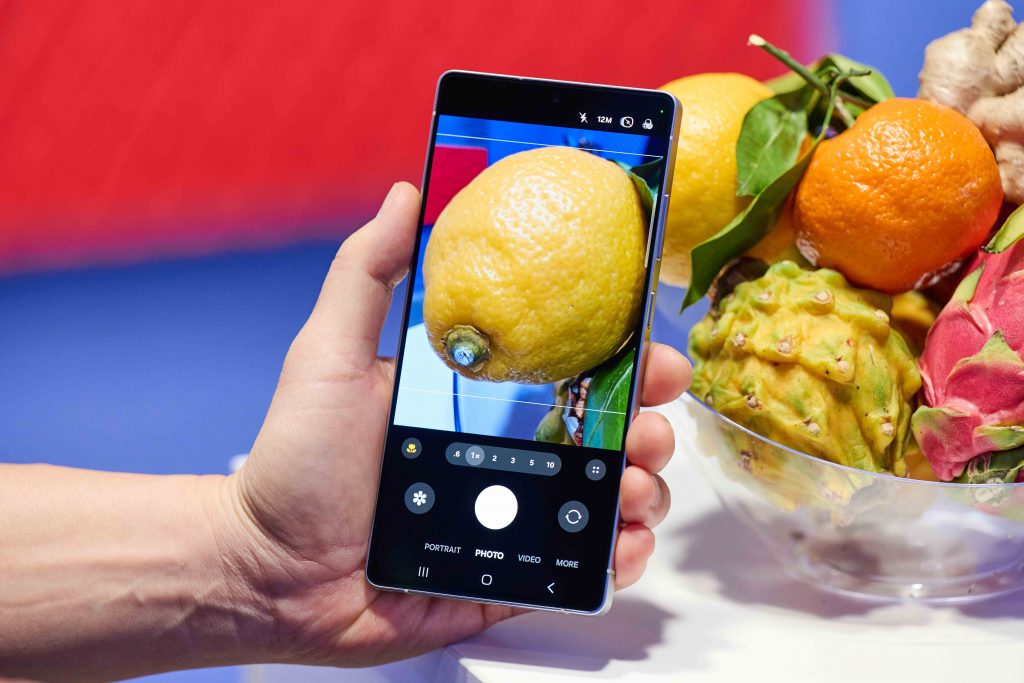
The Galaxy S25 series’ ProVisual Engine sets a new standard for mobile photography, alongside the series’ first 50MP ultra-wide-angle camera for more stunning landscapes and group shots.
For instance, the ProVisual Engine in the Galaxy S25 series works with the device’s first 50MP ultra-wide-angle camera to capture stunning landscapes and group shots with remarkable detail. – by removing photo-bombers, by eliminating background noise from your videos, or by selecting the best face of each individual in group photos, to ensure everyone is looking their best.
This approach enables people to create photos and videos exactly as they want them, preserving the moment as they remember it, without overly complicating or interfering with the photo-taking experience itself. That is the power of thoughtfully integrated AI – it enhances our capabilities and provides better experiences – all while not getting in the way!
Q5: How are you balancing personalisation with privacy concerns?
This is the most critical question in the AI era. Personalisation requires data, but users rightfully demand control over their personal information. We believe that advanced AI and strong privacy protection must evolve together — they are two sides of the same coin.
Our approach to AI in this context is rooted in both transparency and control. People should always understand how their data is being used and have control over what information AI systems can access. This builds trust, which is essential for wider AI adoption.
As such, we want to give users the flexibility to control their privacy and security settings. Users can decide which Galaxy AI feature to operate on their device, with the choice to opt out of cloud-based processing[6].
The new Galaxy S25 series features a Personal Data Engine[7], which analyses your data on-device to deliver highly tailored experiences that reflect your preferences and usage patterns. Privacy and mobile security remains a key focus for all of us at Samsung in this AI-driven era, as users have the right to understand how their data is being used and to control the level of AI intervention in their digital lives.
At Samsung we recognise that there is no privacy without security, and our Samsung Knox security platform[8] is built to help protect users’ personal data. With Galaxy S25 series, we have introduced the Post-Quantum Cryptography (PQC) based protection to Knox Matrix, providing additional safeguards to help protect a user’s cloud backup and sync data.
Q6: Looking ahead, how do you see mobile AI evolving over the next few years?
We are just beginning to scratch the surface of what is possible. We are already seeing AI becoming more “multimodal”; capable of processing and connecting information across different formats like text, images, voice, and sensor data.
Most importantly, AI will become more democratised. Advanced capabilities that once required specialised knowledge or expensive hardware will become more accessible to everyone through their smartphones. This democratisation of AI has the potential to level playing fields and empower people in unprecedented ways.
The journey is far from over, and at Samsung we will continue investing in research and development, exploring new use cases, and engaging with our consumers to ensure we understand their needs, preferences, and concerns in this rapidly changing space.
At the end of the day, the ultimate measure of our success isn’t how advanced the technology is, but how much it benefits and empowers our users.
[1] Fees may apply to certain AI Features at the end of 2025. Certain Galaxy AI features requires Samsung and Google Account. Internet connection may be required to use some features.
[2] Based on an internal survey conducted by Samsung from January to February 2025 among 2,418 participants across 8 markets including Australia, Indonesia, Malaysia, New Zealand, the Philippines, Singapore, Thailand and Vietnam.
[3] Now Brief feature requires Samsung Account login. Service availability may vary by country, language, device model and apps. Some features may require a network connection. Modes and Routines need to be enabled to use Personal Data Engine for context-based Routines suggestions. User needs to consent to access permissions such as photos, videos, audio files, and calendar events. May not display moments depending upon exposure policy. The description of photos provided by moments may not align with the user’s intent. Events schedule notification is supported with calendar apps that utilize Android calendar database and available if Samsung Calendar is installed. Notifications for coupons only available for coupons added to Samsung Wallet with expiration date.
[4] Can detect up to 5 faces. Motion Photo must be activated to use this feature. Visible watermark overlay may be applied. Generative AI may produce unexpected results and accuracy of results not guaranteed.
[5] Results may vary per video depending on how sounds present in the video. Samsung Account login required. Six types of sound can be detected; voices, music, wind, nature, crowd and noise. The actual sound detection may vary depending on audio source, and the condition of the video. Accuracy of results is not guaranteed.
[6] Samsung Account login required. Processing data only on your device allows advanced intelligence features to operate locally, rather than online. Enabling this option may limit the functionality of certain AI features that rely on online data processing for advanced capabilities.
[7] The Personal Data Engine functions under the condition that the Personal Data Intelligence menu is on. Analysed data will be deleted once the Personal Data Intelligence menu is turned off. Personal Data Engine recognises select languages and certain accents/dialects, including but not limited to Arabic, (Simplified) Chinese, Dutch, English, French, German, Hindi, Indonesian, Italian, Japanese, Korean, Polish, Portuguese, Romanian, Russian, Spanish, Swedish, Thai, Turkish, and Vietnamese. Personal Data Engine currently analyses Samsung native applications.
Products > Mobile & wearables
For any issues related to customer service, please go to Samsung.com/au/support for assistance.
For media inquiries, please contact mediateam@samsung.com.


