[Interview] Making Samsung Appliances More Accessible Through ‘Samsung Inclusive Essentials’
on October 15, 2025
When using a washing machine for the first time, many users fumble for the tiny power button or struggle to figure out how to open and clean the filter. For older adults and those with visual impairments, such inconveniences can quickly become real barriers. To address these obstacles, Samsung Electronics has embraced an accessibility-first philosophy, making its home appliances easy to operate.
This philosophy has earned recognition on the global stage. At the 2025 International Design Excellence Awards (IDEA), Samsung received a Gold Award for its “Samsung Inclusive Essentials” concept in the Concepts & Speculative Design category. The award highlights not only innovations in design but also meaningful improvements in usability and social contribution.
Through Samsung Inclusive Essentials, Samsung aims to help all users understand and manage their appliances independently. As such, the design concept standardizes the shape and color of buttons and incorporates multiple senses including sight, sound and touch so that essential functions can be recognized instantly and used seamlessly.
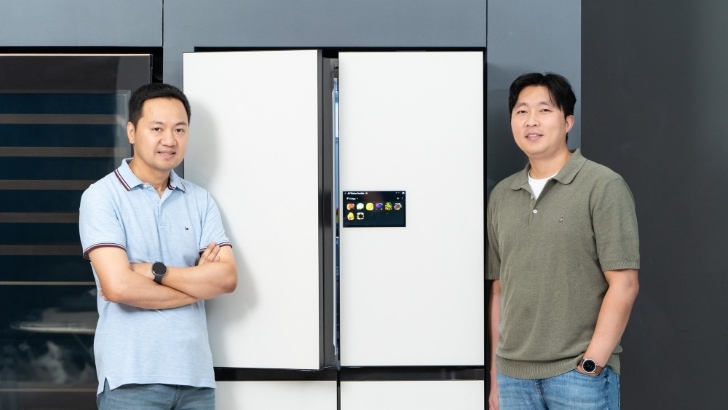
October 15 marks International White Cane Safety Day, established by the World Blind Union to promote and protect the rights of people with visual impairments. To commemorate the day, Samsung Newsroom sat down with Dahwe Park of the Digital Appliances (DA) Business’s FX Design Group and Hyunbin Shin of the DA Business’s Design Innovation Group, who both contributed to the award-winning concept. They shared their insights on the thinking behind Samsung Inclusive Essentials and the goals it seeks to achieve.
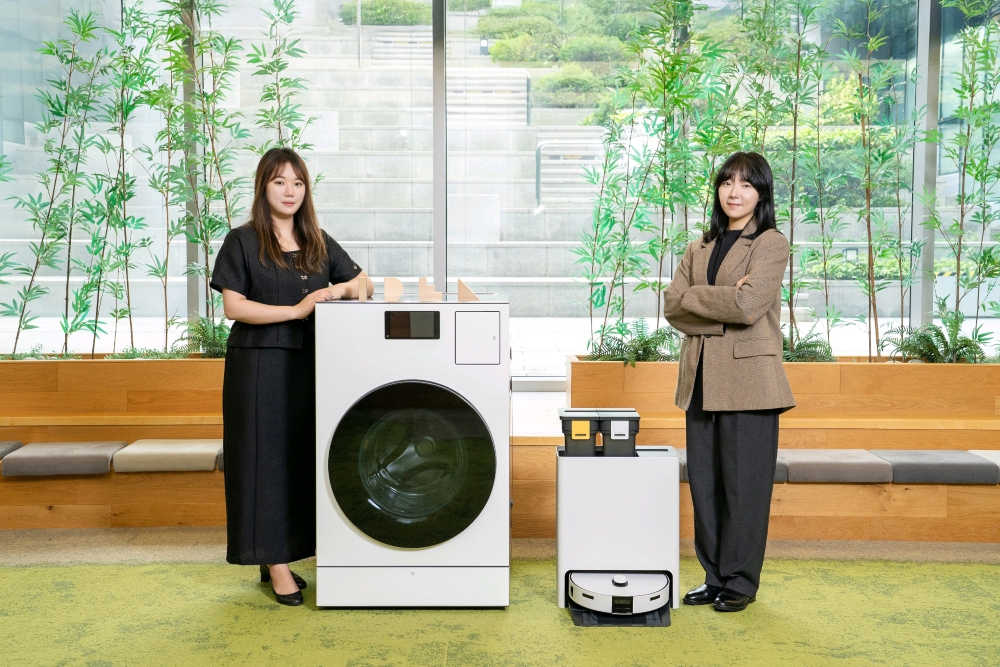
▲ (From left) Dahwe Park and Hyunbin Shin
Q. What motivated the development of Samsung Inclusive Essentials for home appliances?
Park: The latest appliance design has been moving toward simplification — doors that open with a touch instead of a handle and digital displays instead of physical buttons. For older adults and those with visual impairments, these changes have made appliances harder to use. We wanted to break down these barriers and create products that everyone could operate conveniently.
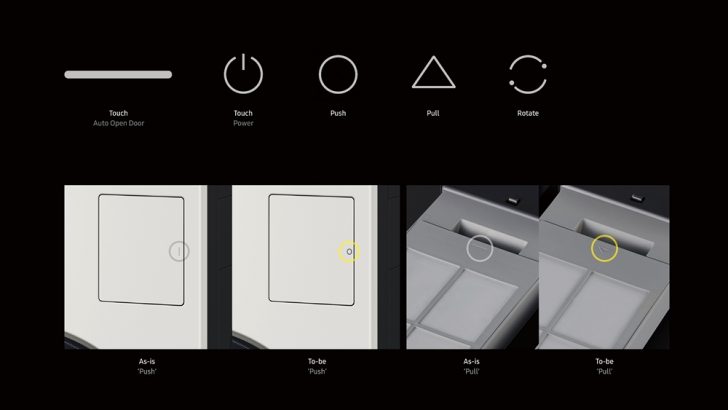
Shin: We analyzed the entire user journey from installation and use to management and maintenance. For instance, the same ‘I’-shaped marking was used inconsistently across products — sometimes to indicate a push button and other times a pull action, which made it difficult for users with visual impairments to operate appliances on their own. To address this, we standardized shapes to match their functions, simplifying and unifying them into more intuitive forms.
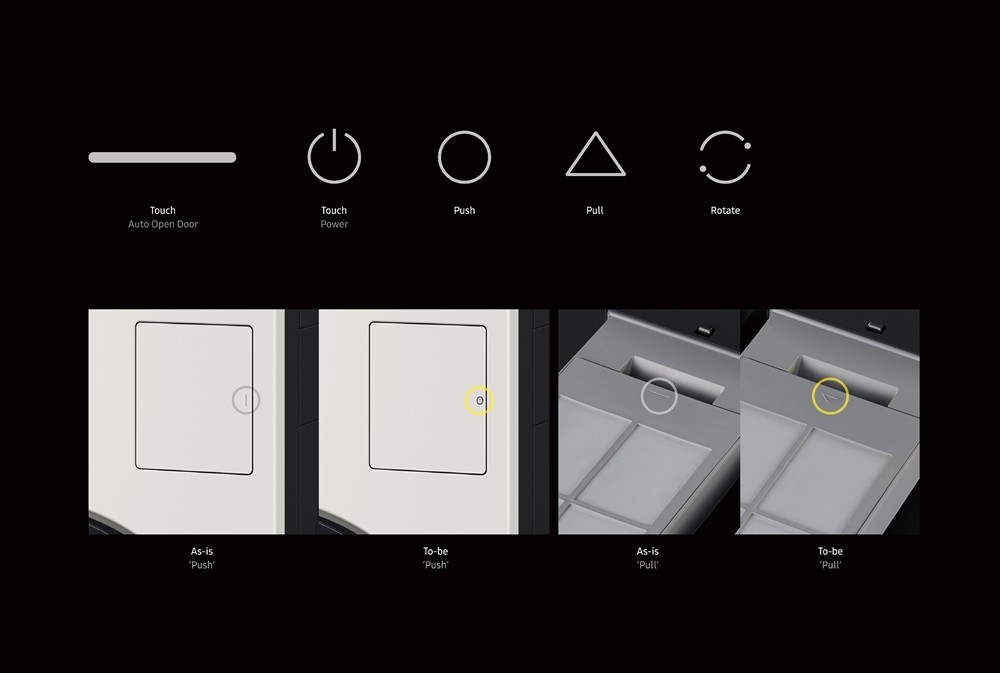
▲ By standardizing button shapes to clearly represent the needed actions — such as push, pull, touch and rotate — and unifying the icons used across products, Samsung Inclusive Essentials enhances clarity and makes controls more intuitive.
Q. How does this solution differ from conventional accessibility design?
Park: Traditional accessibility design often relied on adding separate functions or devices. However, user testing has shown that people with visual impairments prefer not to depend on accessories like Braille stickers or add-ons but would rather use the appliance in its original form like everyone else. Our solution improves the core design itself — without attachments — so that anyone can operate the product independently.
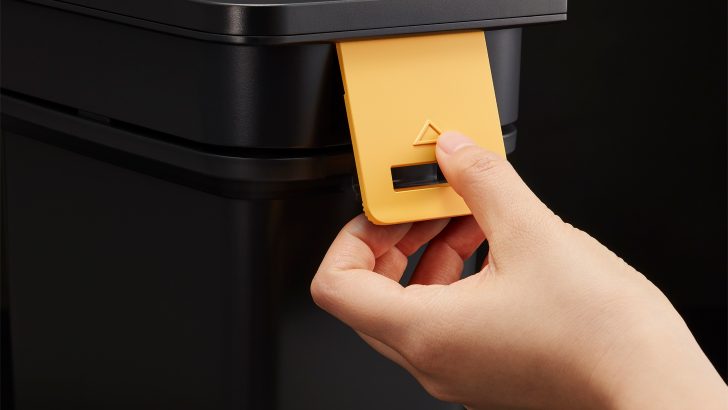
Shin: For the main control areas, we applied a multimodal design that combines sensory elements such as shape, texture, color, lighting and sound. Consistent feedback signals are integrated across the product so that users can recognize and operate its features more easily. Instead of flat printed icons, buttons are embossed and outlined so they can be identified by touch.
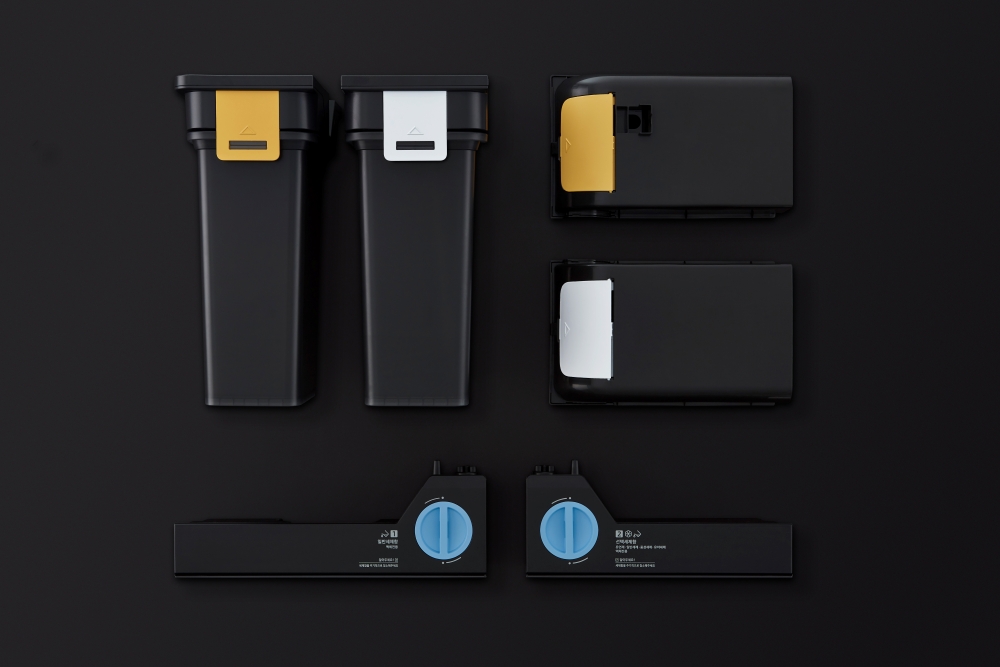
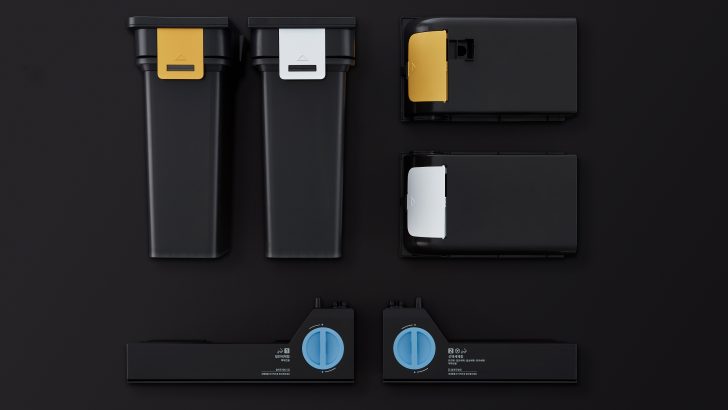
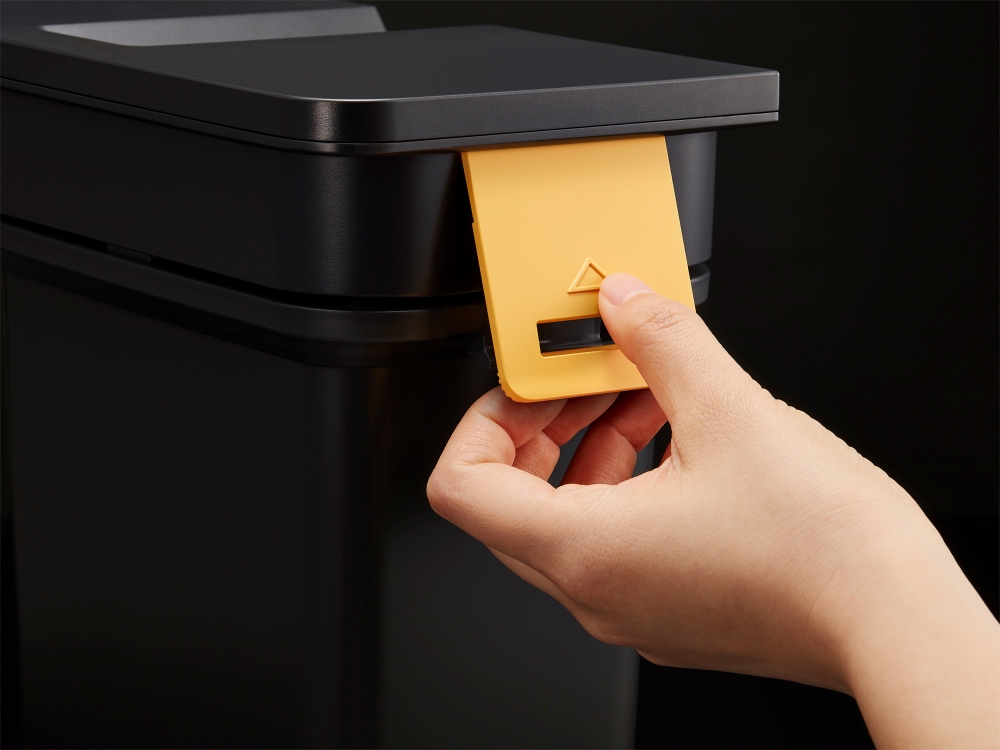
▲ Color-coding the caps of water and detergent containers makes it easy to recognize what they’re containing at a glance — without the need to read small icons.
▲ Buttons with raised outlines make it easy for people to locate them by touch alone.
Q. Was there any feedback from user testing that left a strong impression?
Shin: We conducted multiple user tests at a local welfare center for people with visual impairments and were struck by how many of them live alone. One participant who had lost his sight later in life shared how his independence had diminished and how difficult it felt to constantly rely on others. When he traced the embossed buttons with his fingers, he said, “It may seem like a small detail, but it makes me feel respected and considered. Now I feel that I can use appliances on my own.” That moment resonated deeply with our entire team.
Park: Samsung Inclusive Essentials shows how even small changes can help people with visual impairments live independently without external assistance. It enhances autonomy, supports a more self-directed way of living and reduces the burden on families and caregivers. For individuals with visual impairments living alone, it can be an essential means of ensuring their right to a decent standard of living.
Q. It sounds like this design concept benefits not only people with low vision but all users.
Park: Exactly. Samsung Inclusive Essentials improves the fundamental elements of products in an inclusive way. For example, high-contrast colors help people with low vision, but they also allow other users to recognize controls more quickly. Beyond simply enlarging text or changing icons, we used signals such as shape and color to make appliances easier for everyone to identify and operate in different situations.
Shin: People with visual impairments may seem like a small group, but about one in every 210 people in South Korea is affected. And many people experience difficulties in their daily lives due to decreased vision caused by eye disease or presbyopia. Our solution was designed not just for people with disabilities, but to make appliances more accessible and convenient to use for all.
Q. How do you envision the future of Samsung Inclusive Essentials, and what goals do you hope to achieve?
Shin: While this project focused on people with visual impairments, our aim is to listen more broadly to users who face different challenges in daily life. We want to design appliances that address diverse needs. Samsung Inclusive Essentials goes beyond home appliances simply “usable by everyone” — it is about enabling more dignified and autonomous lives. Regardless of disability, age or environment, every user should be able to experience technology and products equally. We will continue refining our design solutions to achieve that vision.
Park: Samsung Inclusive Essentials is not just about improving features — it’s a user-centric mindset. Imagine turning on a washing machine by simply touching anywhere on the display without having to search for a small power button or opening a dishwasher without locating a specific sensor on the door. Imagine reducing the hassle of water tank and mop cloth maintenance in a robot vacuum by adopting direct water supply systems. All of these illustrate the direction inclusive design should take — making everyday interactions simpler and more seamless.
Samsung Inclusive Essentials begins with small gestures of consideration and grows into meaningful, positive user experiences. With this philosophy, Samsung appliances move beyond accessibility features to embody the design values that enhance usability — empowering everyone to understand, operate and use the products independently, with confidence.
For any issues related to customer service, please go to Customer Support pagefor assistance.
For media inquiries, please click Media Contactto move to the form.