Samsung Electronics and LG Uplus Collaborate on ISAC Technology for 6G
on May 29, 2026
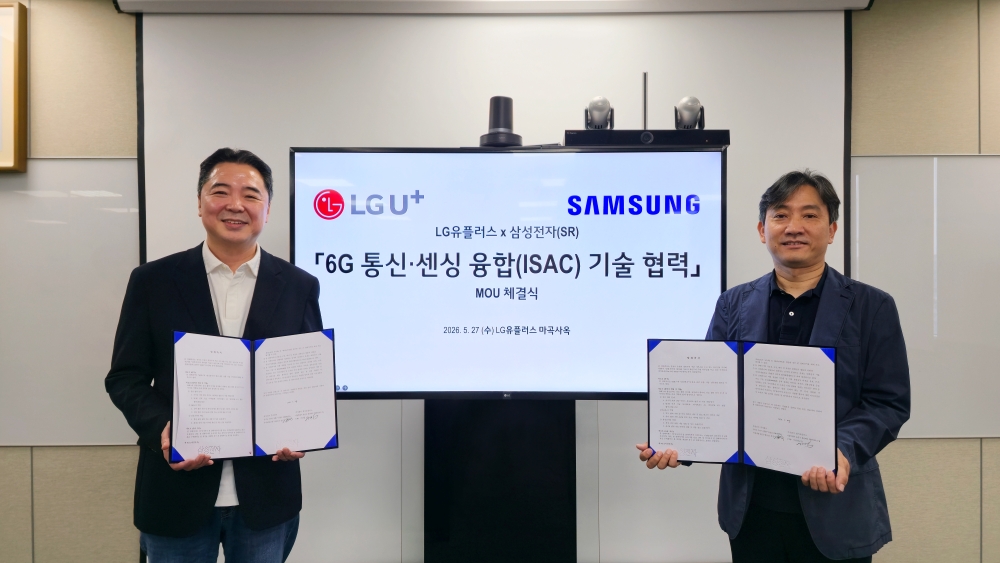
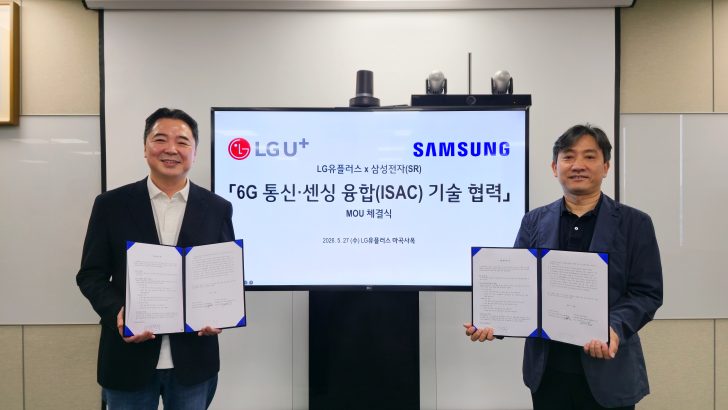
Samsung Electronics and LG Uplus signed a memorandum of understanding (MOU) to jointly research Integrated Sensing and Communication (ISAC) technology at LG Science Park in Magok, Seoul, on May 27. Samsung Research, the advanced R&D hub within Samsung’s Device eXperience (DX) Division, will lead development efforts aimed at securing core technologies for the 6G era.
Wireless Sensing With Existing Networks
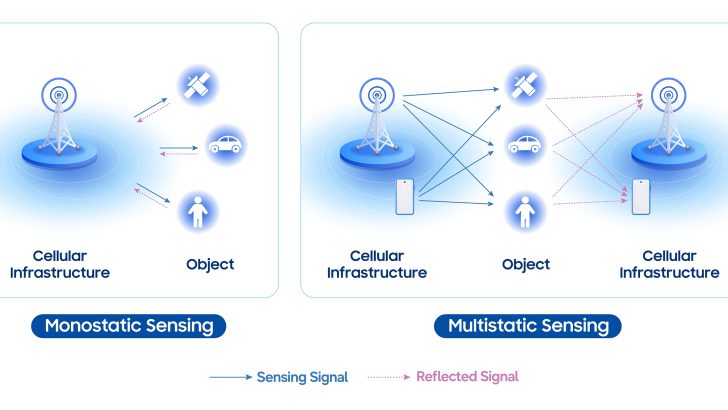
ISAC technology leverages existing communications infrastructure to collect information about surrounding environments without the need for dedicated equipment. By analyzing wireless signals transmitted by base stations and other network devices as they reflect off nearby objects, ISAC can detect an object’s speed, distance and direction of movement.
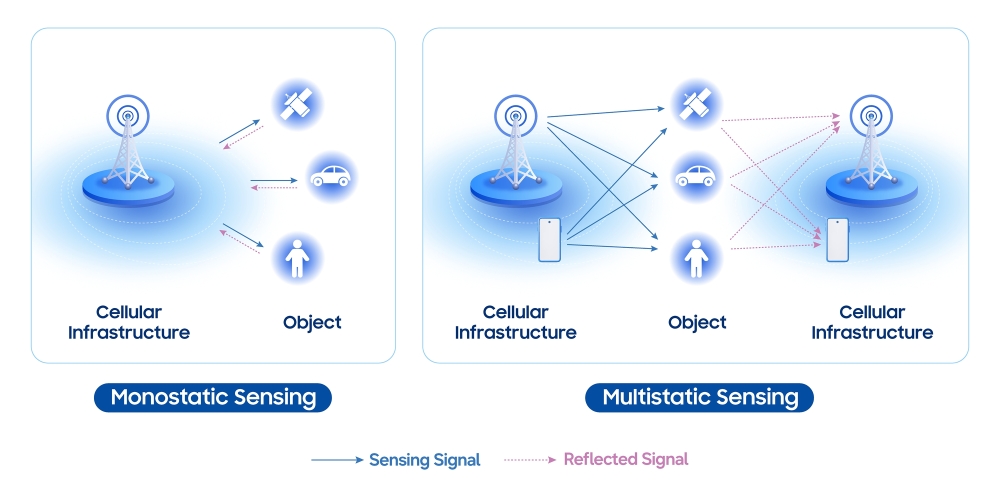
Traditionally, environmental sensing required dedicated equipment such as light detection and ranging (LiDAR)1 or radio detection and ranging (radar)2 sensors. ISAC, however, enables sensing using existing communications infrastructure including cellular and Wi-Fi networks. The International Telecommunication Union Radiocommunication Sector (ITU-R), a global telecommunications standards body, has designated ISAC as one of the three key usage scenarios for 6G.
Improving Safety and Operational Efficiency
ISAC technology is gaining industry attention for its wide range of applications across indoor and outdoor environments, from everyday settings to industrial sites. It can detect human movement in safety-related situations, track drones and robots, and monitor traffic congestion and weather changes.
By leveraging wireless signals, ISAC can identify objects beyond a camera’s field of view and in low-light or nighttime conditions. These capabilities could enable new services that improve safety, efficiency and productivity in consumer and industrial sectors.
Real-World Testing and Multimodal AI Development
To explore these possibilities, the two companies plan to identify ISAC-based use cases and validate the technology’s performance on existing 5G networks and in the 7 GHz band — a candidate frequency for 6G — to assess the feasibility of real-world deployment.
Initially, the collaboration will focus on enhancing everyday safety through human detection and improving network operational efficiency. Over time, the companies plan to expand the research by combining ISAC-generated wireless data — such as location, speed and density information — with camera imagery to further improve detection accuracy. To support these efforts, they will also develop multimodal AI technologies that integrate and analyze diverse forms of sensing data — including images, audio and video.
Under the partnership, Samsung Research will develop core ISAC and AI-driven 6G technologies, while LG Uplus will lead validation including data provision and field-testing infrastructure setup, based on its extensive experience in mobile network operations.
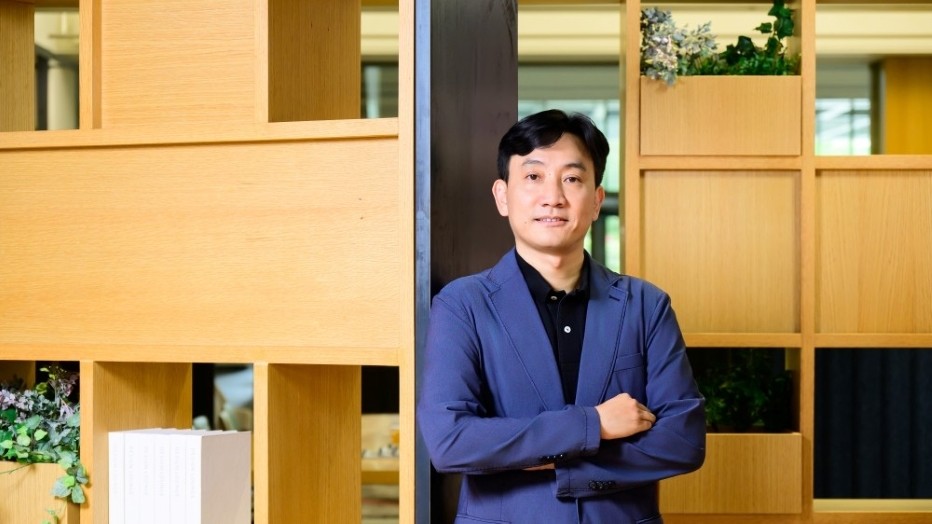
“ISAC is a core technology that transforms communications networks into sensing platforms, enabling users, network operators and industries to experience the full value of 6G,” said JinGuk Jeong, Executive Vice President and Head of the Advanced Communications Research Center (ACRC), Samsung Research at Samsung Electronics. “Through our collaboration with LG Uplus, we will validate the potential of 6G services across a range of real-world environments and continue advancing key 6G technologies.”
“In the 6G era, it will be increasingly important to verify how research technologies perform in real-world communication networks,” said Sangyeob Lee, CTO and Senior Vice President at LG Uplus. “Through our collaboration with Samsung Research, we aim to validate these technologies from a mobile network operator’s perspective and steadily strengthen our capabilities for future communication technologies.”
Following the publication of its 6G white paper outlining the company’s vision for next-generation communications, Samsung has continued strengthening its 6G industry collaboration, including joint technology demonstrations with its global partners at the Silicon Valley Future Wireless Summit in November 2025 and the AI-RAN Alliance at Mobile World Congress (MWC) in March 2026. Moving forward, the company will continue advancing core 6G technologies to enable safer, smarter and more efficient everyday experiences.
For any issues related to customer service, please go to Customer Support pagefor assistance.
For media inquiries, please click Media Contactto move to the form.